
The versatility of ratchet fasteners: practical solutions for a secure hold and ease of use
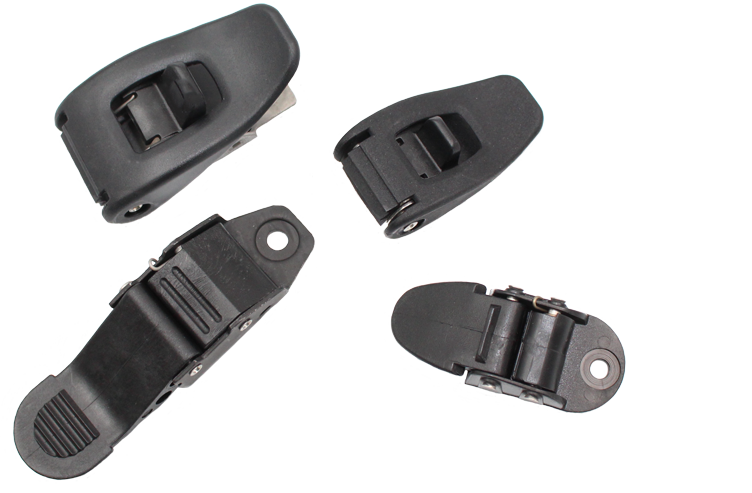
Among our most popular products are our plastic ratchet fasteners. These small, durable fasteners ensure security and are easy to use. They are typically used in conjunction with a Timing belt used.
Numerous manufacturers across various industries use our ratchet fastening systems to secure sports equipment, orthopaedic products and other items. We offer our ratchet fasteners in a wide range of variants, which can be used flexibly with different products.
In the following article, we answer the most important questions about ratchet fasteners in general. We also showcase some of our fasteners so that you can get an idea of what we have to offer.
What is a ratchet fastener?
Most people have probably come across ratchet fasteners before. They are so simple and intuitive to use that we often use them quite casually, almost without realising it. Whether as a fastening system on a child’s car seat, or when Cycling helmet or as a component of outdoor equipment: ratchet fasteners are everywhere. But how does the fastener’s mechanism actually work?
A ratchet fastener essentially consists of a toothed strap and the ratchet mechanism. The toothed strap is a flexible plastic strap featuring fine, raised teeth on one side.
This belt is fed into the ratchet mechanism. Its key component is a small pawl that engages with the spaces between the teeth. This ensures that the timing belt can initially only move in one direction and cannot be pulled out of the mechanism. If the belt is moved quickly past the pawl, a ratcheting sound is produced.
In addition, Gudo’s ratchet fasteners feature a lever integrated into the mechanism. This allows the strap to be tightened more securely than if it were simply moved through the fastener by hand. Mechanically, this utilises the leverage effect to transmit the force. This ensures that the ratchet fasteners can be closed particularly securely and tightly.
To release the timing belt when opening the fastener, the pawl must be released. On our ratchet fasteners with a lever mechanism, this is done using the lever. When it is pressed down fully, the strap is released and can be pulled out of the mechanism.
Where are ratchet fasteners used?
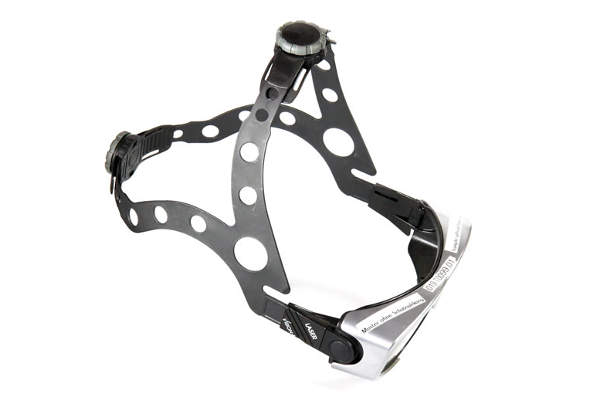
Ratchet fasteners are used in a wide variety of products. Here are a few examples:
- Cycling helmets
- Luggage straps and suitcase locks
- inline skates
- Climbing equipment
- Sports shoes (such as specialist running or walking shoes)
- Child car seats
- Orthopaedic aids (for example, orthoses and prostheses are sometimes secured using ratchet fasteners)
- Outdoor equipment
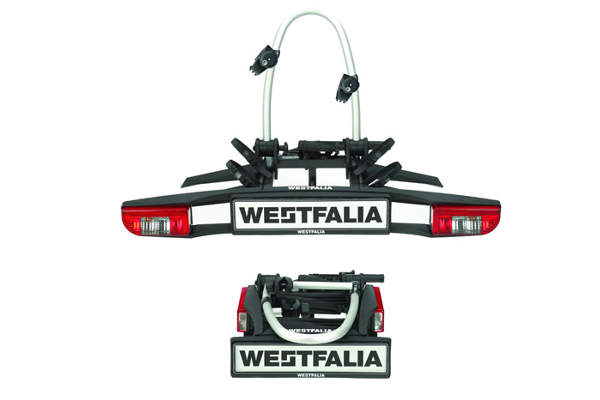
There are also lashing strap systems that use ratchet fasteners. Other products, such as our Bicycle frame holder use this simple, reliable technology as a component.
It is clear that ratchet fasteners are used across a wide range of industries and in connection with various products. As a manufacturer of high-quality ratchet fasteners, we strive to meet this demand by offering a whole range of various ratchet fasteners offer.
Our ratchet fasteners Mini A and Mini N are used, for example, with 18-millimetre-wide timing belts. The Ratchet fastener Mega S/SN is used with a 22-millimetre-wide strap. We also offer some of our fastenings with an additional safety mechanism to prevent them from opening accidentally.
We also offer our closures on a range of base plates. Curved or flat, made from plastic or stainless steel: the choice is yours. Not quite sure which of the many options is best for your product? Our team will, of course, be happy to advise you on your selection. You also have the option of requesting samples.
How are ratchet fasteners combined with other fastening solutions?
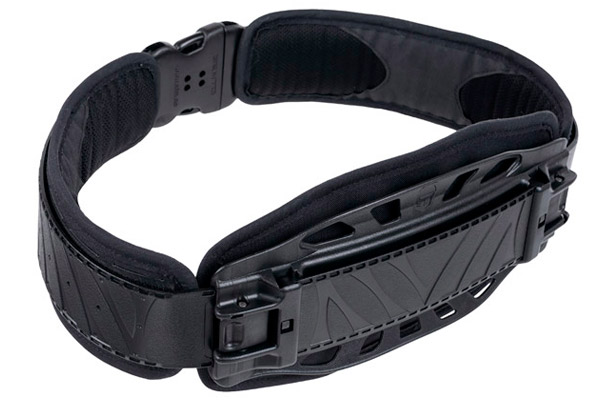
Ratchet fasteners are easy to use, cost-effective and suitable for a wide range of products. However, there are situations in which a slightly more sophisticated screw cap or whether other solutions make more sense. Often, combining it with a ratchet fastener is also effective.
Helmets are a good example of this. Whether it’s a cycling, climbing or safety helmet, safety depends on all fastenings being tight and secure. As a general rule, the tighter the helmet’s fastenings are, the safer it is.
At the same time, comfort must also be ensured. This can be achieved, for example, with a twist lock such as Swock achieve. It allows for stepless adjustment, so that the helmet can be perfectly fitted to the head.
Ratchet and tension fasteners can also be combined effectively with twist fasteners on ski boots or inline skates. Twist locks are often the preferred choice for lacing such sports shoes tightly and securely. Ratchet fasteners are sometimes used in addition to these, for example to provide extra support for the upper.
What makes a good ratchet fastener?
The following factors are key to a good ratchet fastener:
- Durable materials: The use of high-quality, durable plastic and metal ensures that the ratchet fastener can withstand even the most extreme conditions. As part of a range of high-quality products, Gudo’s ratchet fasteners really stand out in this respect.
- Precision manufacturing: High-quality ratchet fasteners must be manufactured to a very high standard. The quality of the manufacturing process is particularly important for the interaction between the timing belt and the ratchet. We manufacture timing belts and fasteners using injection moulding, which enables us to guarantee the highest quality.
- Ergonomics: One of the major advantages of ratchet fasteners is their ease of use. A good fastener can be operated with one hand and can be used even in cold weather and whilst wearing gloves. This is particularly important when fasteners are used on products for people with disabilities. However, ease of use is also beneficial in many other situations.
These factors are not always equally important. For fastenings used on sports equipment, workwear or orthopaedic aids, for example, safety is clearly the top priority. For other products, such as high-quality suitcases, however, material quality, size and design may be more important.
Last but not least, the price can, of course, also be a deciding factor. This is one of the reasons why it makes sense to weigh up the various aspects carefully.
To meet a variety of requirements, we offer a wide range of ratchet fasteners. This allows you to select the right option for your specific application. You can always rely on the highest quality. We would be happy to advise you on your choice if required.
Tailor-made solutions and advice from Gudo
Our aim is to ensure that our product range covers as wide a variety of applications as possible. However, we are well aware that there are some products for which a standard solution is not the best option. If you are unsure whether our ratchet fasteners are the right choice for you, please do not hesitate to contact us.
During a personal consultation, we will work with you to determine whether one of our standard fasteners is suitable for your project. If necessary, we will also assess whether a clamp fastener might be a more appropriate option.
Alternatively, we would be happy to see if there are any options for providing you with a custom-made fastener. Take a look at our page featuring Speciality products shows just how many options we offer. You can contact us by phone, email or simply via our contact form.