
What are tension fasteners and how do they work?
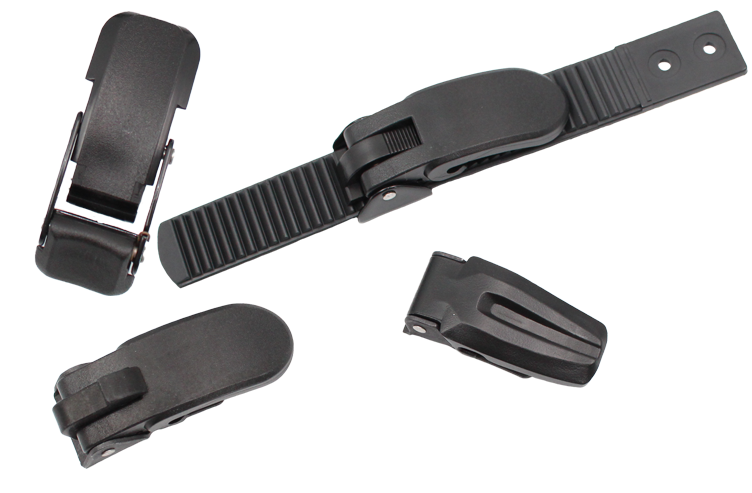
The primary function of fastenings of all kinds is to secure and hold things firmly in place. This applies, for example, in sport or with medical products. Manufacturers of ski boots, for instance, place particular emphasis on the quality of the fastenings. Above all Tension fasteners are popular because of their durability and ease of use. In the medical field, for example, they are used in orthopaedic products.
But what exactly are tension fasteners? How does the mechanism work? The following article explains the finer points of the technology.
Gudo AG is a leading supplier of tension fasteners for a wide range of industries and applications. Our buckles, originally developed for ski boots, are characterised above all by the reliability of their central locking mechanism. Even under heavy loads, our buckles hold firm, offering the best possible protection.
What is the purpose of clamps?

Our buckle fastenings were originally developed for use on ski boots. Anyone who has ever stood on skis knows that during a descent, enormous pressure is exerted on the boots and, in particular, on the fastenings. The immense stress our fastening systems are designed to withstand therefore makes them ideal for other applications as well.
In addition, Custom-fitted ski boots can be worn. This is not just a question of comfort, but also of safety. The fastenings are crucial in this respect. Ensuring the shoes are securely and snugly fastened guarantees that pressure is distributed optimally. At the same time, it is important that the shoes do not come undone on their own.
There are still good reasons for leading manufacturers to fit ski boots with lace-up fastenings. This is because lace-up fastenings
- close securely.
- can withstand heavy loads.
- are easy to close and open.
- are cost-effective.
- are durable.
In addition, our tension fasteners can be combined with various locking systems. Ratchet fasteners, for example, are frequently used as they allow for precise pre-adjustment.
These factors also make our clamps an attractive option for use in many other sectors. Manufacturers of high-quality orthopaedic products, in particular, rely on our fastening solutions.
How a clamp fastener works
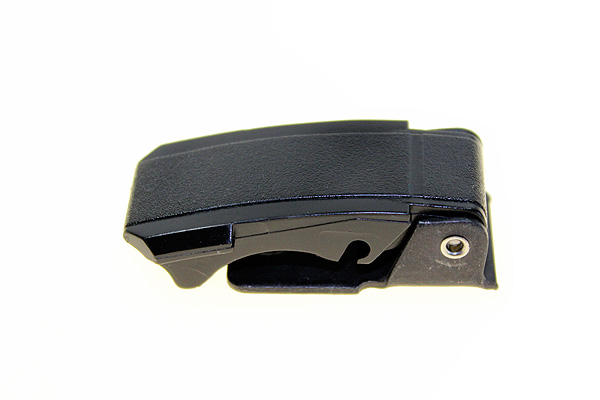
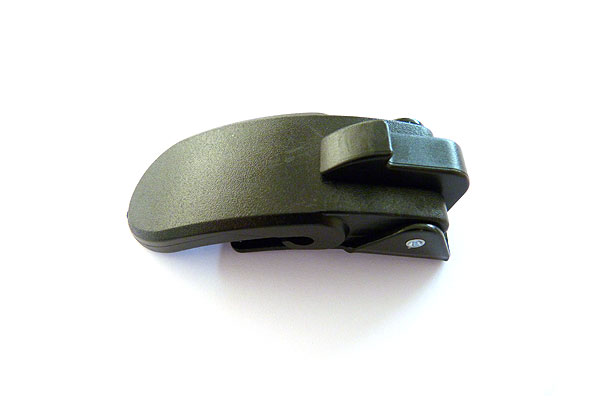
The main function of the tension buckle is to tighten a strap. The tension buckle has a buckle through which the strap is threaded. Typically, the strap is also fitted with teeth (toothed belt) that engage with the buckle, thereby providing initial fixation. The strap is then pulled through the buckle by hand as far as possible.
Once the strap can no longer be tightened by hand, the fastener’s tensioning or lever mechanism comes into play. The lever engages with a counterpart, which is attached to the ski boot, for example. The counterpart may also be a second timing belt. Tilting the lever tightens the belt. Thanks to the lever action, this can be done with less effort than when tightening it manually.
Once the lever has been fully moved, it locks into this final position. This secures it firmly in place and, thanks to a snap-lock mechanism, prevents it from coming loose on its own. Various mechanisms are used for this locking function.
We offer the following lever variants:
- RVS/RVS-A: This fastener operates via a snap mechanism. The release mechanism is only available on the RVS-A model.
- RVH: The lever is fitted with an additional catch, which must be released before opening.
- RVK: The lever is secured by a locking mechanism.
- TVC: It uses a fabric strap. The snap mechanism secures the fastening when locked in place.
- RVR: It can be used with a steel cable.
In addition to the clamp fastener, a twist lock can be used in many cases. This allows the tightness of the fastener to be fine-tuned with particular precision.
Where are tension fasteners used?
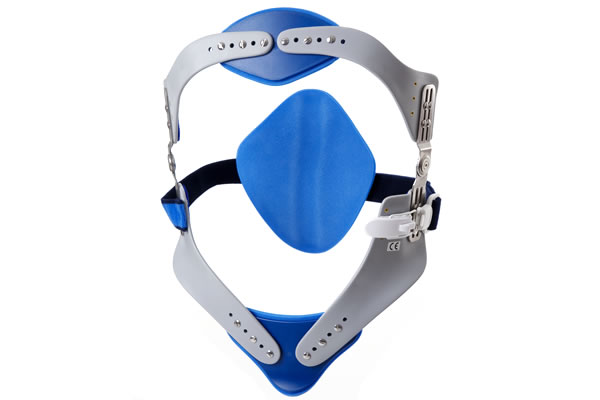
As described, we originally developed our tension fasteners as a fastening system for ski boots. However, this has long since ceased to be their primary use. This is because the high quality and reliability required for this purpose also make them ideal fasteners in other areas. In particular, orthopaedic products are often secured using our tension fasteners.
Use in orthopaedic products
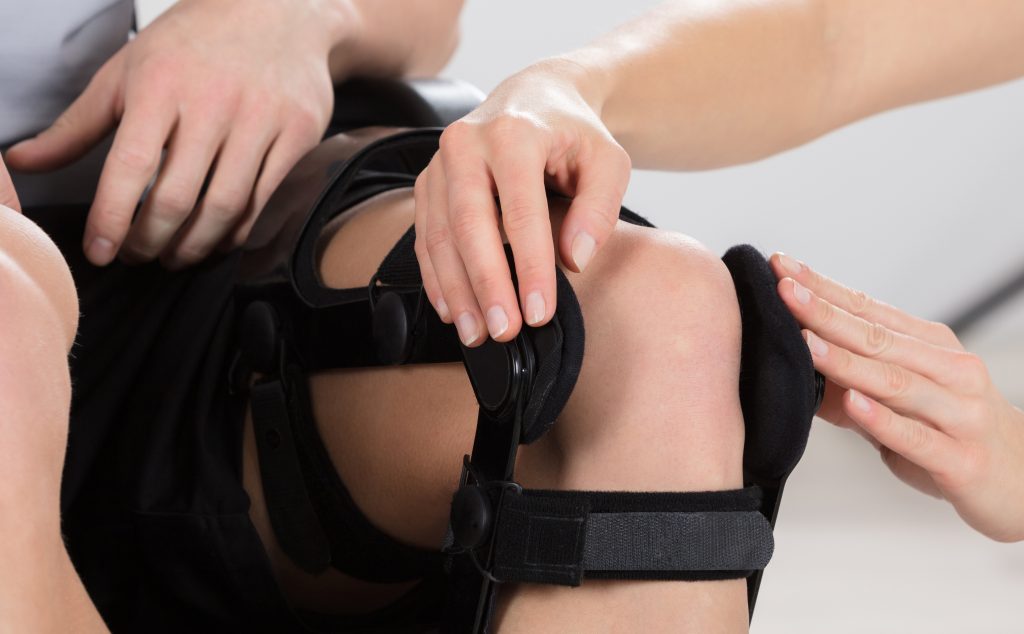
Numerous manufacturers in the orthopaedic sector are now increasingly turning to our technology. The easy-to-use tension fastening systems are ideally suited to patient products. In particular, they enable orthoses and prostheses to be secured quickly and securely. As with ski boots, it is essential that the fastenings on orthopaedic products can withstand the rigours of everyday use.
For example, our tension and ratchet fasteners are used to secure orthoses. Orthoses are orthopaedic devices designed primarily to relieve pressure on specific parts of the body, which need to be temporarily secured. In many cases, tension fasteners enable patients to put on the orthoses themselves and secure them safely.
Our ratchet fasteners are also frequently used to secure dentures. The fine-tuning capability of the fasteners makes it possible to adjust the dentures precisely to the patient’s needs. This significantly improves both comfort and security.
Many other orthopaedic products also make use of tension fasteners. For example, stabilising straps and supports in wheelchairs or on walking aids are often secured using tension fasteners. These flexible fasteners also play a role in securing medical devices to the body or to a wheelchair.
Other areas of application
The same applies to the use of our clamping fasteners in industry. The low production costs of the fasteners also play a major role here. We ensure, right from the design stage, that our fastening solutions are as simple and cost-effective as possible.
By manufacturing our clamping fasteners using as few different parts as possible, we reduce production costs. This makes our Swiss-made solutions a cost-effective option for industrial applications as well.
Furthermore, the design, which is kept to a minimum number of parts, has the advantage that production faults are less common and are spotted more quickly. This further reduces costs and, above all, improves safety. This is of the utmost importance, particularly when it comes to fastenings.
Thanks to our efficient manufacturing processes, we are able to supply even small quantities of our clamping fasteners. This makes them even more attractive and allows them to be used in just-in-time production processes.
Tailored solutions
At Gudo AG, we see ourselves not only as a supplier of high-quality components, but above all as a service provider. Together with our partners, we explore whether there are opportunities to incorporate our clamping fasteners into bespoke solutions. We are confident in the high quality of our fastening systems.
If you are interested in trying out our closures or any of our other products, please get in touch. Please feel free to contact us even if you are unsure whether your product would benefit from our closure system. We will be happy to advise you based on technical specifications and help you make the right decision.
By the way, we deliver worldwide. So if you need our solutions as part of a production line abroad, this is not a problem. We would be happy to advise you on this in a personal consultation – particularly with regard to delivery times.
Clamp fasteners from Gudo AG: Secure and durable

As with all our products, the same applies to our tension fasteners: quality and safety come first. Our fasteners, originally developed for ski boots, are made from high-quality plastic. Even after prolonged use and under heavy strain, the easy-to-use tensioners perform their function reliably. This is particularly important for products in the medical and orthopaedic sectors.
This makes our fasteners the ideal solution for any application where safety and reliability are key. Whether for sports equipment, industrial use or orthopaedic medical devices, you can rely on our products. Incidentally, in some cases our Screw caps can be an attractive alternative or addition. For example, they allow for fine-tuning on cycling and climbing helmets.
Are you interested in our clamping systems but not yet sure whether our solution is right for you? If so, please feel free to get in touch. The easiest way to reach us is via our contact form. Of course, we are also happy to assist you by phone or email.